
When public servants become the story
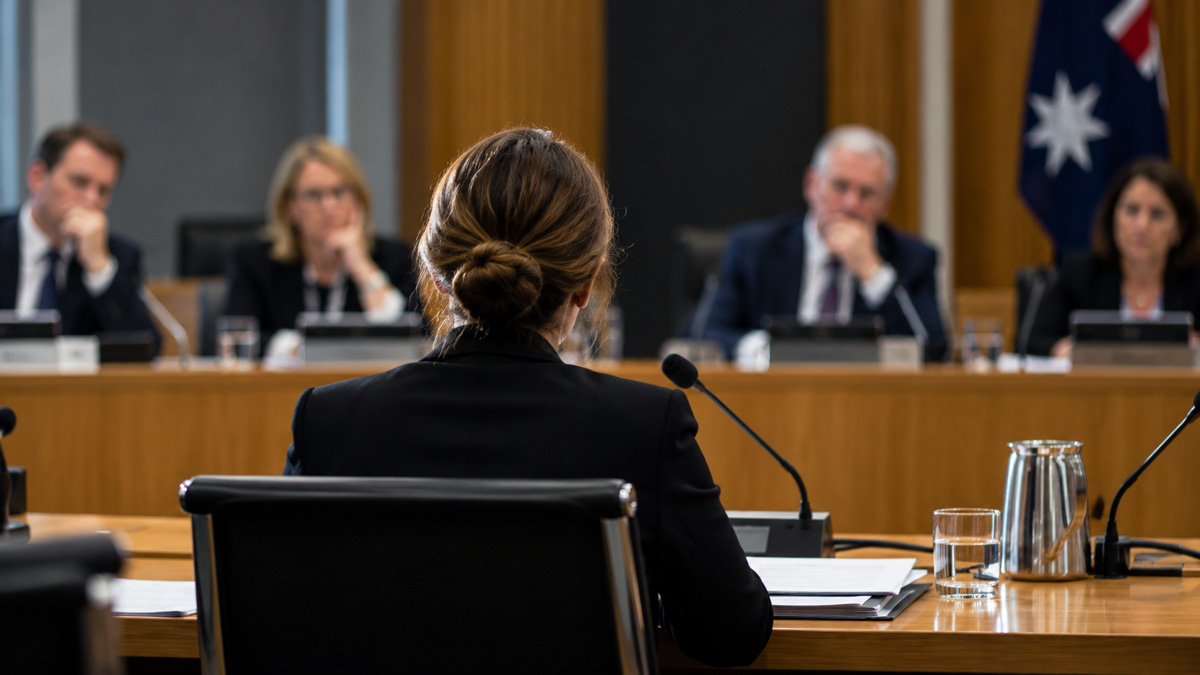
A few months ago, I wrote about the emotional reality of public accountability, with the intention of shining a light on the very real personal impact that appearing in public forums in an age of social media can have on public servants.
A month later, the Parliamentary Joint Committee on Parliamentary Services announced an enquiry into the Behaviour Codes for Commonwealth parliamentary workplaces – since resulting in a particularly noteworthy submission from the Secretaries Board about this very topic.
What the Secretaries Board is concerned about
The Secretaries Board submission relates to the experiences of APS employees, members of the ADF, agency heads and statutory office holders who appear before parliamentary committees, including Senate Estimates hearings.
The submission’s key themes include:
- Protecting the role of official witnesses and recognising the different obligations of parliamentarians and public servants.
- Maintaining robust parliamentary scrutiny while drawing a line at conduct that demeans, intimidates, humiliates or personally targets officials.
- Concerns about social media clips that remove questions or answers from context or present an incomplete or misleading picture of committee proceedings.
- The impact on public servants and their families including ridicule, hostility, abuse, harassment, and threats that can affect their safety and wellbeing.
- Stronger guidance for parliamentarians, including fairer use of committee footage, appropriate context, and safeguards against misleading editing or personal attacks.
It goes on to warn that if the situation continues, it could deter experienced public servants from taking on roles that involve appearing before parliamentary committees, while also making it harder to attract people from under-represented groups, including First Nations people. This could, in turn, reduce both the depth of experience and diversity of perspectives available to government.
What happens when the person carrying out the decision takes the blame?
There is a broader sociological question underneath this debate: what happens when the person responsible for implementing a decision becomes the person expected to defend it?
Public servants occupy a unique position. They’re required to be politically impartial and carry out the work of government, while elected representatives are free to argue for, against or around those decisions in public. When an official is then personally attacked for work they’ve been directed to undertake, the accountability relationship becomes blurred. The person carrying out the decision absorbs the criticism, yet the person with the political authority to make and defend that decision is insulated from some of its consequences.
That dynamic is not unique to government. Other high pressure professions have developed ways of recognising what happens when people are placed under this type of intense scrutiny.
Aviation perhaps provides the clearest example. Its “Just Culture” framework was developed around the understanding that blaming individuals for honest mistakes can make the system less safe. If people fear punishment, they become less willing to report errors and problems. Of course wilful violations and gross negligence still have consequences, but there is a big distinction between holding people accountable for their actions and creating a culture where fear of blame prevents the organisation from learning.
There is a useful lesson here for parliamentary workplaces. Effective accountability needs to support scrutiny while also allowing the people involved to do their jobs well.
The same principle matters when parliamentary exchanges are clipped, shared and amplified online. A public servant who knows that an exchange could be reduced to a short video, stripped of its context and followed by personal criticism is not experiencing the same conditions as someone taking part in a private professional discussion. They are already operating within constraints around political impartiality and what they can say publicly. Adding the prospect of public ridicule or personal attack changes the environment in which they have to perform.
That does not mean officials should be protected from difficult questions or robust scrutiny. Parliament has an important role in testing evidence and holding government to account. It does mean there is a case for professionalising the exchange by:
- preparing people for the psychological demands of high stakes public scrutiny
- setting clear expectations for those doing the questioning
- recognising the difference between challenging someone’s evidence and making the individual the target.
The current inquiry is looking at how the existing codes are operating in practice, and whether they are effective. It raises a larger question about what kind of parliamentary workplace we want to create – one where scrutiny is rigorous and people can still perform their roles effectively, or one where the personal cost of being the person in the room becomes part of the job. Is that a job anyone would really want?
Preparing people for the pressure
If we expect people to perform effectively under intense public scrutiny, preparation needs to be part of the job. That means helping leaders:
- Understand what pressure does to their thinking, behaviour and nervous systems.
- Build the skills to stay grounded when the stakes are high.
- Develop practical strategies for difficult conversations and high pressure situations.
That is where leadership development and executive coaching can play a valuable role.
If your role involves leading through scrutiny, uncertainty or change, please get in touch. Together, we can explore what 1:1 coaching or a tailored workshop could look like for you or your team.